


Energy and energy efficiency
We manage energy consumption under the Energy and Resource Saving Programme up to 2027, which sets priorities for reducing consumption in the Fund's key sectors of activity.
Energy consumption is one of the key factors contributing to the Group’s environmental impact, due to the high energy intensity of its production processes, including the generation of electricity and heat from non-renewable sources, as well as the extraction and processing of fossil fuels. As a result of initiatives to reduce energy consumption, modernise equipment and implement advanced digital solutions, the Fund Group’s total energy consumption fell from 492 million GJ in the base year of 2021 to 452.3 million GJ in 2025.
Fuel and energy consumption for own needs, million GJ
| Indicator | 2023 | 2024 | 2025 |
|---|---|---|---|
| Energy resources consumed by Group companies | 431.0 | 444.2 | 452.3 |
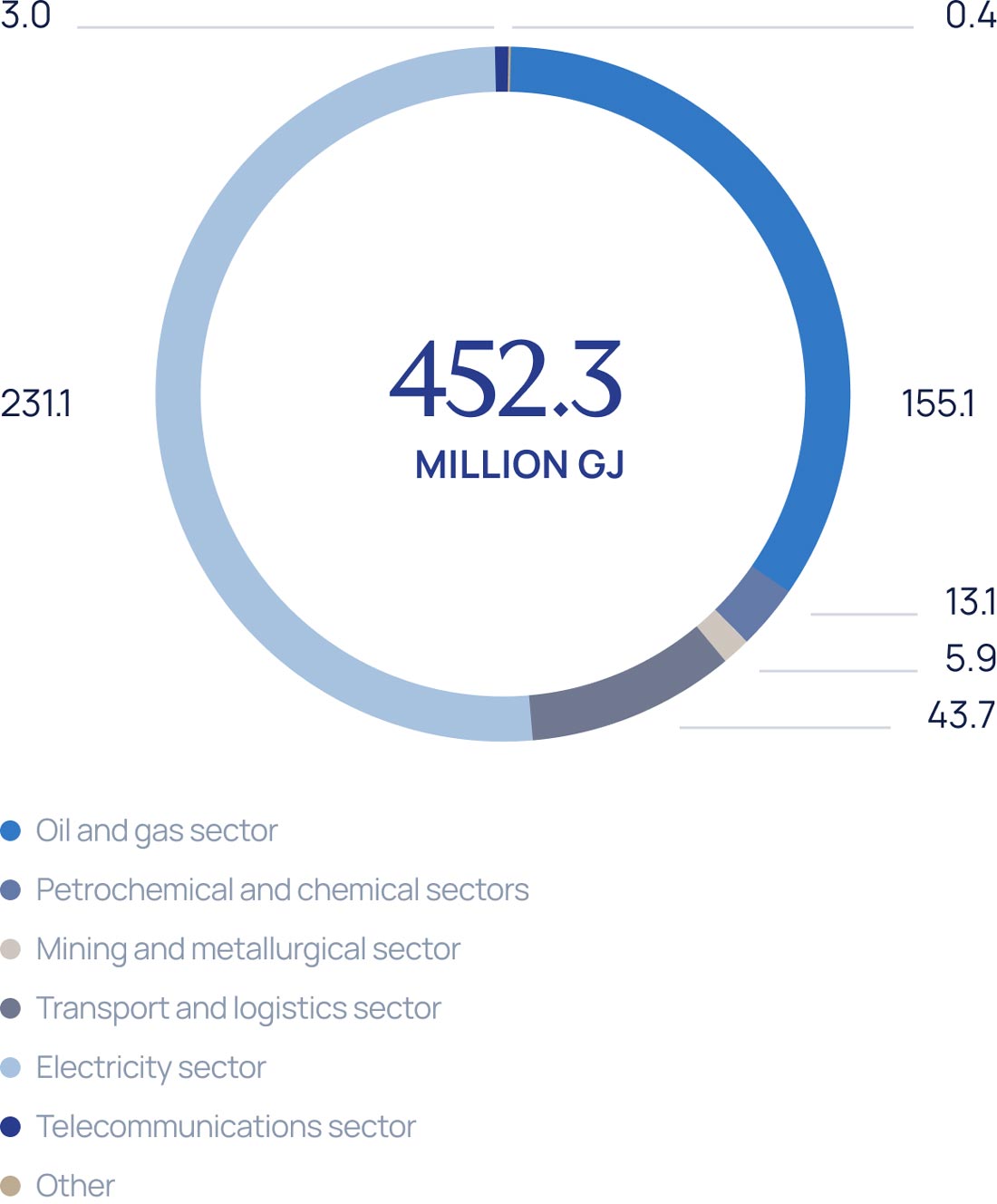
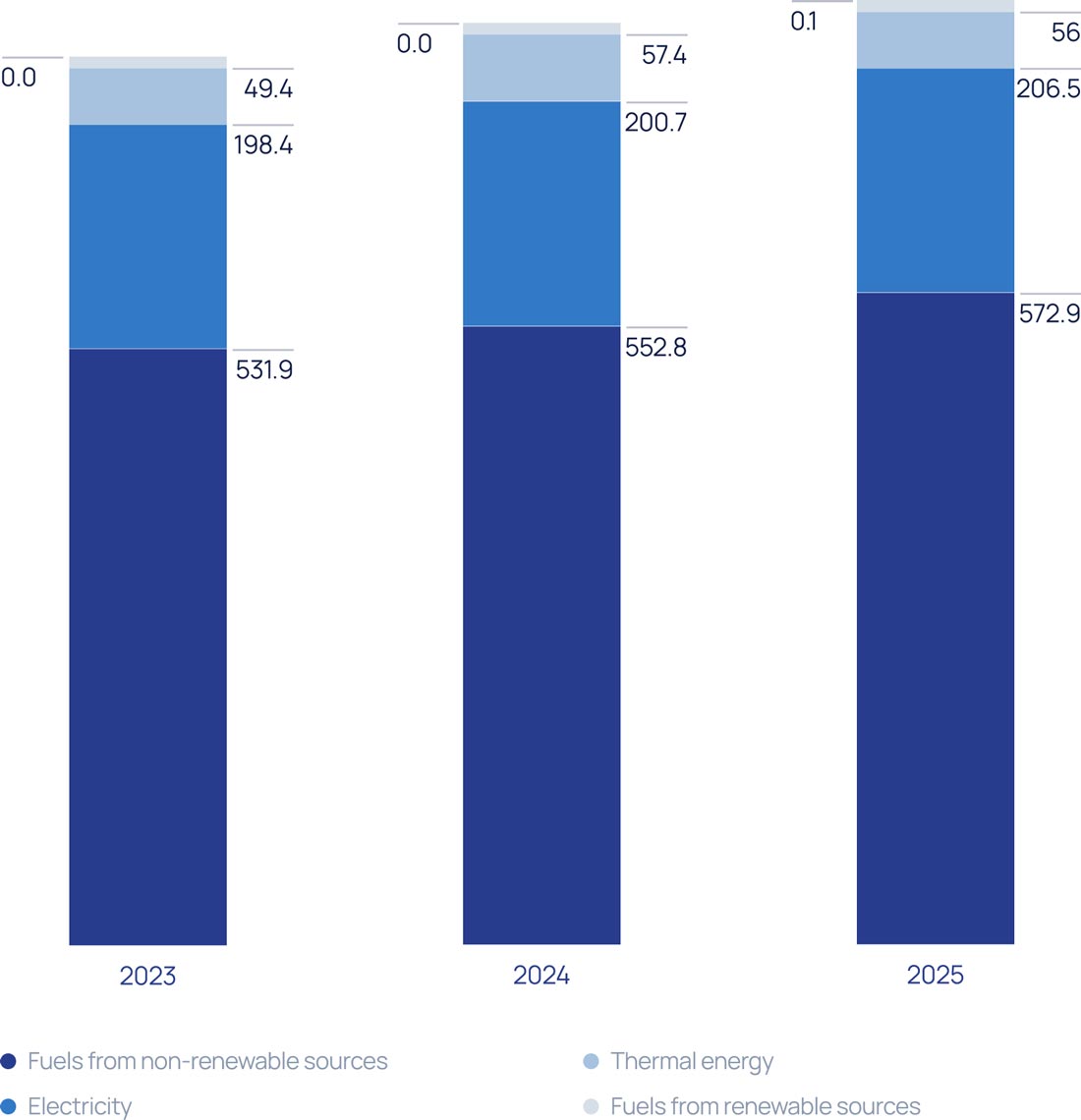
The Group's energy consumption is based on non-renewable resources (coal, gas, liquid fuels) — 69%. Purchased electricity accounts for 19.0% of consumption, and thermal energy for 2%. Within non-renewable energy resources in 2025, coal dominated at 63%, followed by natural gas at 17.8% and refinery gas at 6.7%.
In 2025, we increased energy supplies to external customers (+6.5% for electricity and +18.5% for heat), against a backdrop of moderate growth in overall consumption and a decline in heat consumption.
Despite rising demand, we utilised our generation capacity efficiently and were able to increase energy supply to external consumers without a corresponding increase in our own consumption.
The oil and gas sector ranks second in terms of energy consumption after the electricity sector. This is due to the high energy intensity of the processes involved — the preparation and processing of raw materials, the operation of pumping and compressor equipment, and the need to maintain a continuous production cycle.
We are actively constructing and commissioning new renewable energy facilities. As a result, energy consumption from renewable sources has more than tripled compared with 2024.
In 2025 we also reduced fuel and energy resource consumption by 8% versus the 2021 base year through lower solid-fuel consumption in the electricity sector and lower natural-gas consumption in the oil and gas sector.
Several initiatives to reduce fuel and energy consumption were implemented during the reporting period.
In the oil and gas sector, energy efficiency measures at gas transmission system facilities-including the replacement of inefficient cathodic protection stations, obsolete pump units and lighting fixtures with LED equivalents — have reduced specific energy consumption by 7%.
NC Kazakhstan Temir Zholy JSC
The reduction in specific energy consumption at NC Kazakhstan Temir Zholy JSC was achieved by renewing the locomotive fleet and modernising rolling stock, which reduced energy use per unit of transport work.
Effect from delivery projects
Additional gains came from targeted energy-saving measures, including modernisation of lighting and heating systems. Total savings amounted to 111 thousand GJ, partly offsetting the increase in energy consumption associated with higher transportation volumes.
In the reporting year, we introduced digital solutions, including elements of data analytics, automation and predictive management, to manage operating regimes more accurately and reduce energy losses.
KEGOC JSC
In 2025, the second stage of the implementation of the Wide-Area Monitoring System (WAMS) at KEGOC JSC was completed.
Effect from delivery projects
The project connected 59 monitored interconnections at 21 substations across seven branches of the inter-system electricity grid. The implementation of WAMS enhances real-time observability of the energy system, supports the tracking of stability parameters and supports data-driven decision-making.
At the same time, we continued the development of intelligent Smart Grid solutions, including the modernisation of SCADA/EMS dispatch-management systems and the expansion of emergency-protection automation (WACS). These systems allow real-time monitoring of grid parameters, faster detection of deviations and redistribution of load between facilities. More accurate management of power-system operating regimes reduces technological losses, inefficient equipment loading and excess energy consumption. In 2025, we also continued a pilot project to introduce energy storage systems in Kazakhstan’s Unified Energy System. We consider storage systems as a tool for balancing the power system as the share of renewable energy grows and as an element of more flexible and efficient load management.
In addition, the Samruk Innovation Hub has launched a number of initiatives aimed at integrating digital and smart solutions into the production processes of our portfolio companies. These projects focus on the use of data analytics, the automation of operational processes, and improving the efficiency of energy use.
Energy consumption from renewable sources, thousand GJ
| Indicator | 2023 | 2024 | 2025 |
|---|---|---|---|
| Energy (from RES generation) | 16.9 | 42.5 | 134.6 |