

Waste management
The Fund Group has built a waste-management system covering all stages of the waste life cycle — from generation and accounting to processing, disposal and inclusion in secondary use.
Waste management is carried out in accordance with the requirements of the Environmental Code of the Republic of Kazakhstan. Waste Management Programmes have been developed for each production facility for the period of validity of the environmental permit. The programmes contain specific indicators for reducing waste generation and increasing the share of waste recycling.
The uranium mining and processing sector generates solid radioactive waste (SRW) and liquid radioactive waste (LRW). This waste is managed in accordance with the requirements of the legislation of the Republic of Kazakhstan and international standards. The entire volume of LRW is placed in tailings storage facilities, which are operated in accordance with the Regulations and the Environmental Code of the Republic of Kazakhstan.
In the mining and metals sector, corporate standards and long-term programmes are in place to improve waste management efficiency, including initiatives under the Zero Waste concept.
NAC Kazatomprom JSC is implementing the Radioactive Waste Management Programme for 2023–2030, aimed at improving management efficiency and introducing the best global practices.
We conduct waste inventories and develop accumulation methods for each type of waste, taking into account its hazard class, toxicity, physical state and other characteristics. All facilities maintain systematic records of waste by type, volume and characteristics, including classification by hazard level. Waste accounting results are submitted to the authorised environmental protection body in the prescribed reporting forms, including quarterly reports based on production environmental control, annual waste inventory reports and hazardous waste passports.
Trend in waste generation, million tonnes
| Indicator | 2023 | 2024 | 2025 |
|---|---|---|---|
| Hazardous waste | 0.39 | 0.37 | 0.39 |
| Non-hazardous waste, including: | 99.2 | 110.1 | 116.9 |
| Ash-and-slag waste | 8.9 | 8.8 | 8.1 |
| Overburden | 89.8 | 100.7 | 108.6 |
| Other non-hazardous waste | 0.5 | 0.6 | 0.2 |
| Total | 99.6 | 110.5 | 117.3 |
Enterprises maintain strict control over contractors working with waste: during procurement, the availability of the required licences and the compliance of the material and technical base with safe waste management requirements are checked. Waste transportation and transfer are also controlled, with contractors’ vehicles equipped with GPS trackers.
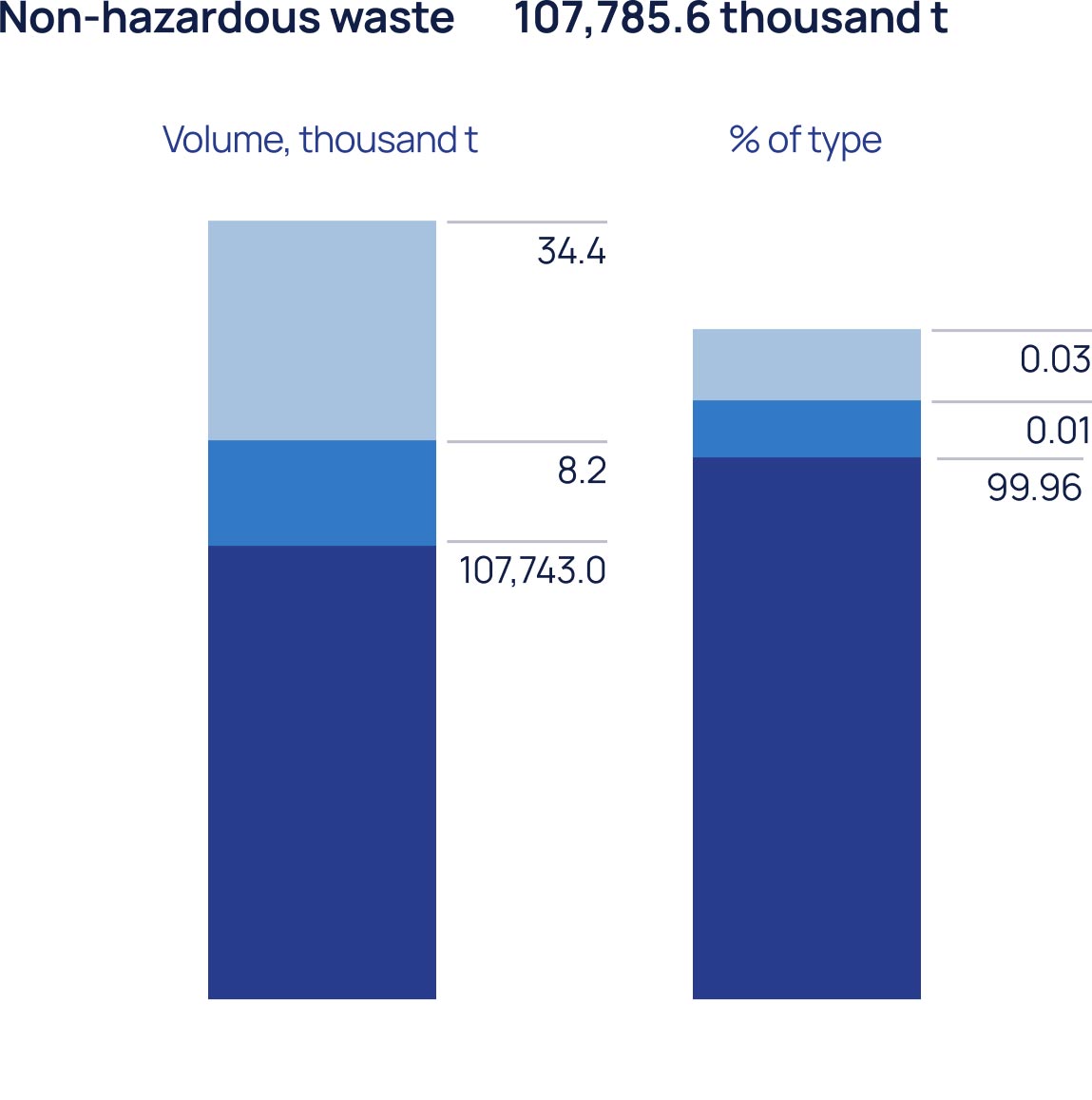
The largest share of the Fund Group’s waste is generated in the energy sector, at 98%, reflecting industry specifics. Of this, 93% is overburden from coal mining, while the remainder consists of ash and slag waste from coal-fired CHPPs.
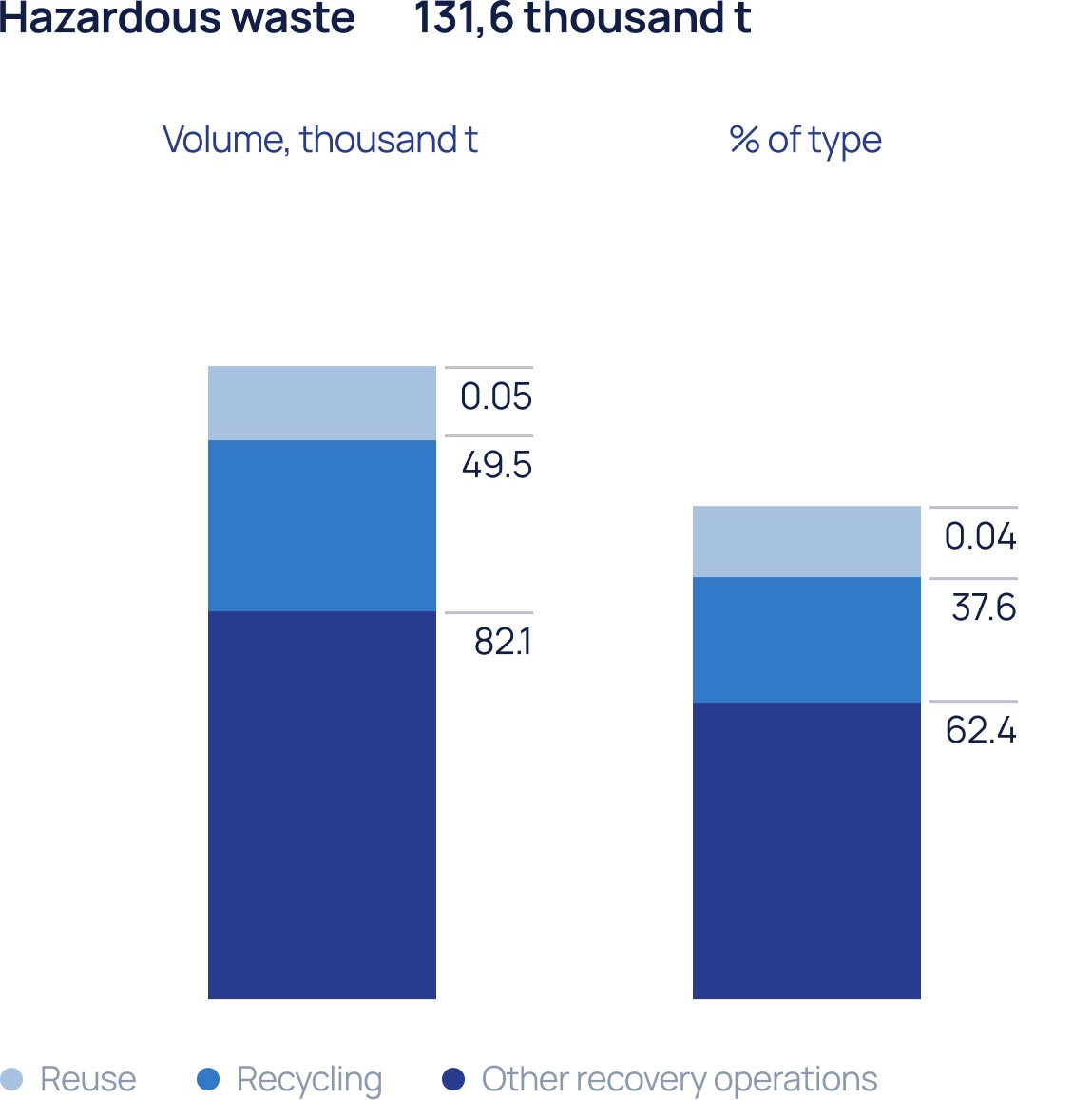
The oil and gas sector accounts for 0.4% of total waste, while this sector generates 96% of all hazardous waste in the Group, including drilling fluids, oily waste, spent catalysts and chemical reagents.

Hazardous waste requires specialised disposal and is subject to separate collection and recycling. Special storage areas have been equipped at enterprises for temporary storage for no more than six months before transfer to specialised organisations.
Approach to waste management and implementation of initiatives to reduce and dispose of waste
Most waste is transferred to specialised organisations for recycling, reuse or utilisation. Until transfer, waste is temporarily stored on enterprise premises in compliance with established storage periods and requirements, which helps minimise the risk of environmental impact.
The oil and gas sector continues to implement programmes for the disposal of historical oil-containing waste and the remediation of contaminated land.
In 2025, 338.8 thousand tonnes of historical oil waste were disposed of. Since 2018, 4.6 million tonnes of waste have been processed, and historical contamination has been fully eliminated on the contract territory of Karazhanbasmunay JSC.
In corporate and office centres, we are introducing separate waste collection for plastic, aluminium and waste paper, with subsequent transfer for recycling. For example, Samruk-Kazyna Ondeu LLP collected 30 thousand plastic bottles and aluminium cans as part of an environmental competition and transferred 75 kg of waste paper for recycling.
Waste management in 2025