

Ombudsman
The Ombudsman operates on the basis of the Samruk-Kazyna JSC Corporate Governance Code, the Regulations on the Ombudsman and other internal documents. The Ombudsman institution applies the principles of independence, neutrality, confidentiality and informality, maintains a trusted format for engagement with employees, and helps to develop mutually acceptable solutions.
In 2025, the Ombudsman institution covered the Fund and Group companies through a network of corporate ombudsmen, an Ombudsmen Council and a system for monitoring the social and labour environment.
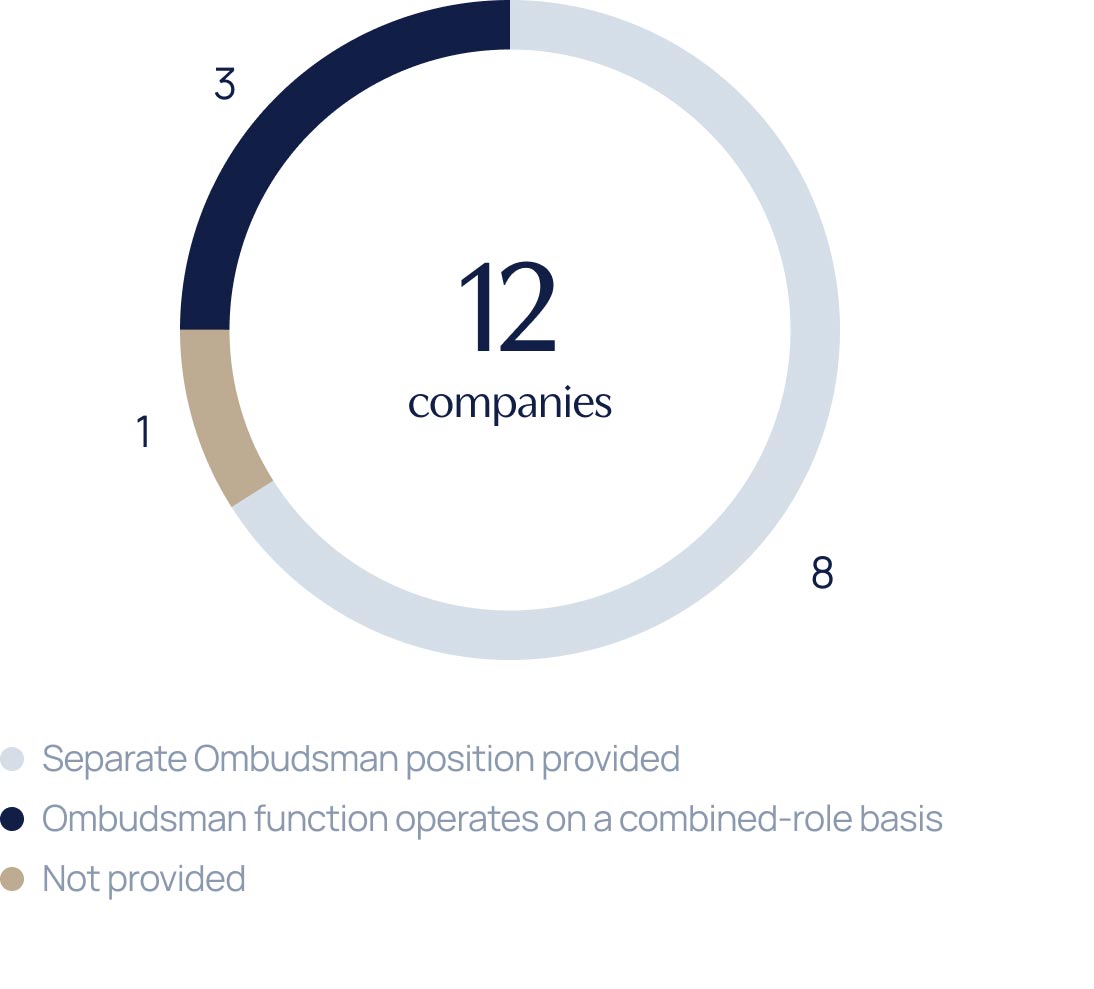
In the reporting period, the Ombudsmen Council held seven meetings focused on the exchange of practices and the provision of methodological support. At year-end, of the 12 portfolio companies, 8 had a dedicated ombudsman position, and a further 3 companies were running the function on a combined-role basis.
Training events were organised for ombudsmen and responsible staff of Group companies, focused on developing the skills of proactive response to human-rights risks, conducting due-diligence procedures and managing conflicts in conditions of social tension.
Methodological guidelines have been developed for management's engagement with workforces in the event of labour disputes and strikes, aimed at improving the predictability of action and reducing the risk of escalation.
The Found monitors social and labour conditions on an ongoing basis – both within the Group’s companies and at contractors. The principal tool is the social-and-labour-risks heat map, which aggregates data on employee reports, employee turnover, the trust index and disciplinary disputes, allowing risks to be identified across a broader perimeter.
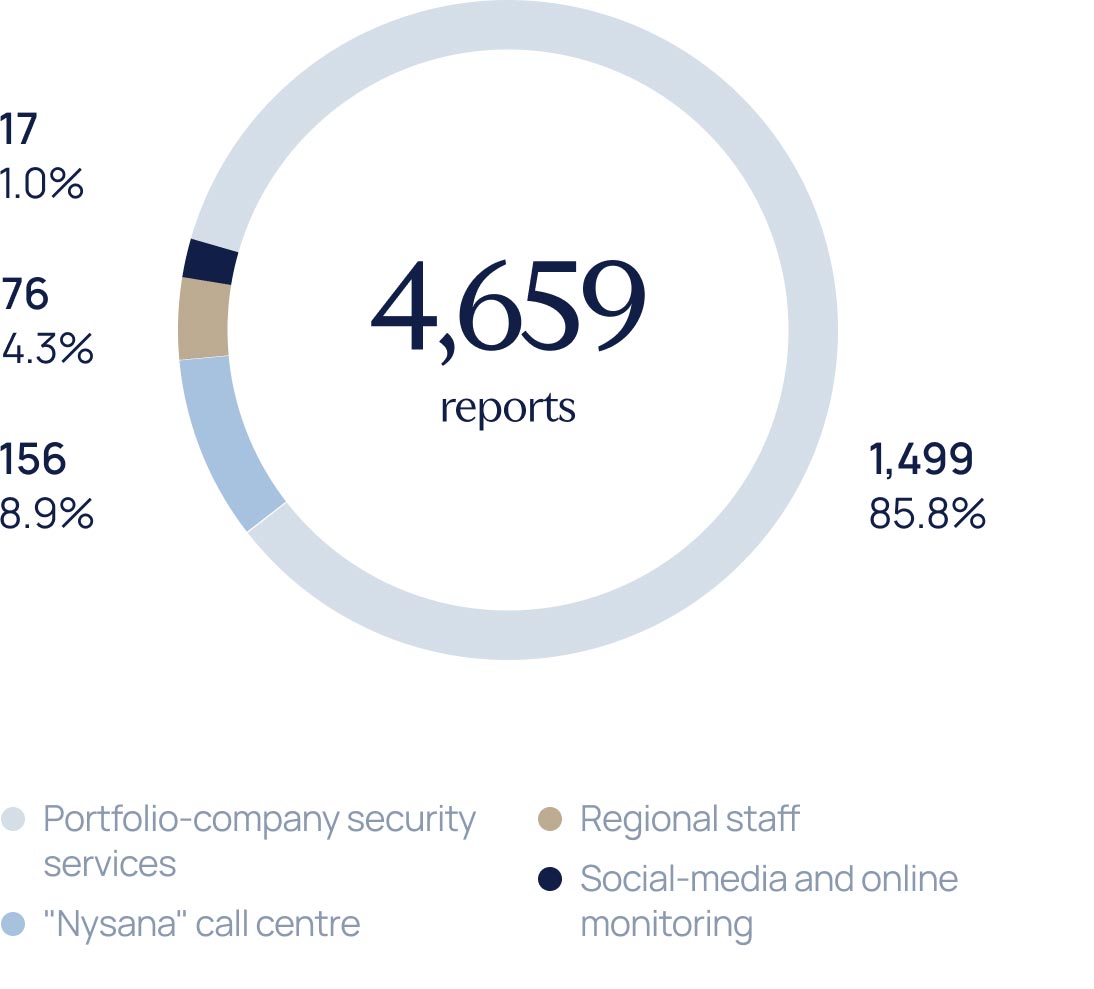
In 2025, the Social Stability Monitoring Centre received 4,659 reports through four communication channels, of which 1,748 were deemed relevant.
Sources of reports
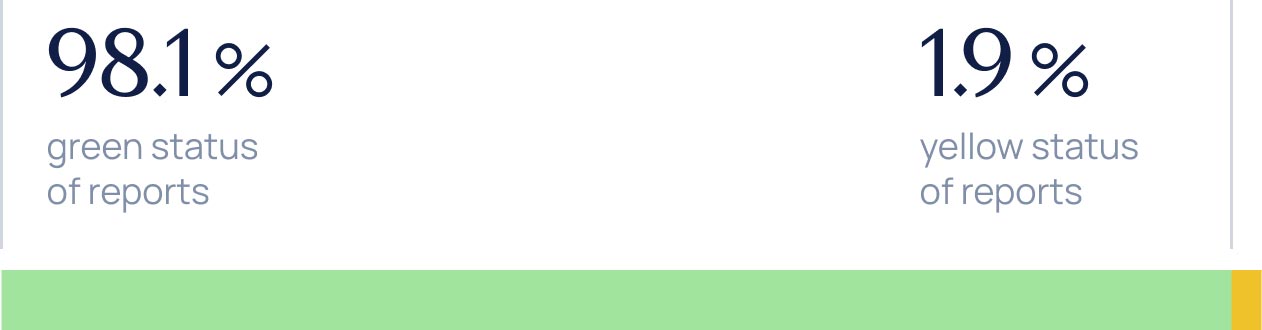
Following review, 98.05% of relevant reports received "green" status, 1.94% received "yellow" status; no reports with "red" status were recorded.
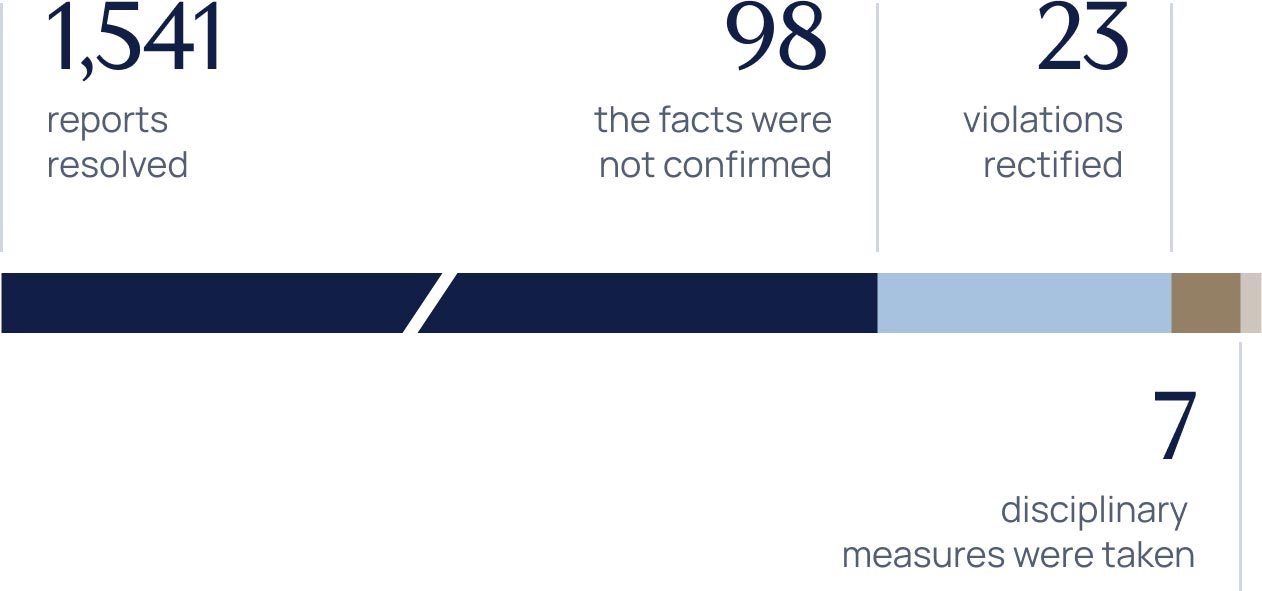
Resolution outcomes: 1,541 reports were resolved; in 98 reports the facts were not confirmed; in 23 reports the confirmed violations were rectified; and in 7 reports disciplinary measures were taken.
Compared with 2024, the number of strikes fell from 23 to 9, and video appeals from 82 to 42. The analysis of incoming signals showed that the most sensitive topics for employees remain unequal hiring and working conditions, pay issues, and certain aspects of compliance with labour rights.