
Transport and Logistics
Development of transport and logistics potential

National Company Kazakhstan Temir Zholy JSC (KTZ) is a key transport and logistics holding and operator of the main railway network of the Republic of Kazakhstan, performing the functions of a national cargo and passenger carrier.
The company is central to economic integration, connecting 17 regions of the country and three cities of republican significance, as well as providing transport links with five neighboring countries - China, Russia, Uzbekistan, Kyrgyzstan and Turkmenistan through 16 connecting points.
KTZ owns the largest fleet of locomotives and wagons and is one of the largest employers in Kazakhstan.
Cargo turnover (operational)
291.3billiont-km
Key performance results 2025
| Indicator | 2024 | 2025 |
|---|---|---|
| Production indicators: | ||
| Cargo turnover (operational), billion tonnes-km | 272.1 | 291.3 |
| Passenger turnover, billion p-km | 11.7 | 11.4 |
| Transit traffic, million tonnes | 27.5 | 33.0 |
| Financial indicators 27, KZT billion: | ||
| Revenue | 2,163.9 | 2,757.1 |
| Net profit | 157.8 | 339.9 |
| Costs | 2,071.5 | 2,506.5 |
| Operating profit | 409.8 | 671.8 |
| Net debt | 2,706 | 3,349.4 |
| Amount of taxes paid | 144.9 | 198.2 |
| Sustainable development indicators: | ||
| Greenhouse gas emissions (Scope 1 and Scope 2), thousand tonnes of CO2-eq | 5,058 | 5,236 |
| Accidents (injured) | 21 (27) | 18 (27) |
| Including fatal accidents (fatalities) | 8 28 (9) | 2 (5) |
| Headcount | 117,681 | 118,506 |
In 2025, National Company Kazakhstan Temir Zholy JSC continued its stable development, achieving significant success in the transportation and logistics sector. Transit volumes increased by 20.3%, reaching a record 33 million tonnes, reflecting the effectiveness of the Company’s strategy and reinforcing Kazakhstan’s role as a key regional transit hub.
During the reporting year, the Company implemented a large-scale investment programme focused on infrastructure modernisation and rolling stock renewal.
The total amount of financing raised under loan agreements in 2025, at the exchange rate as of December 31, 2025, amounted to 1,256 KZT billion, while actual liabilities under these loans (including partial disbursement) amounted to KZT 623.3 billion.
The increase in debt levels is investment-driven and primarily associated with the implementation of long-term infrastructure projects.

- Financial indicators for 2024 and 2025 are presented in accordance with the audited financial statements of the Company.
- The indicator was adjusted following the results of court proceedings (October 2025): the road traffic accident of March 22, 2024, was classified as work-related.
Financial stability
| Indicator | 2024 (Fact) | 2025 (Fact) | 2026 (Plan) | 2027 (Plan) | 2028 (Plan) | 2029 (Plan) | 2030 (Plan) |
|---|---|---|---|---|---|---|---|
| Debt/EBITDA | 4.80 | 3.7 | 3.38 | 3.51 | 2.93 | 2.57 | 2.23 |
| EBITDA/interest expenses by % | 3.23 | 3.94 | 5.55 | 4.99 | 4.85 | 5.93 | 6.54 |
| Debt/Capital | 1.46 | 1.5 | 1.80 | 1.61 | 1.24 | 1.01 | 0.85 |
The Company is implementing a set of measures aimed at enhancing operational efficiency and improving financial position. Key initiatives include the modernisation of infrastructure and rolling stock, optimisation of costs and business processes, and expansion of the revenue base.
The implementation of these measures enables the Company to expand its operational activities while reducing the impact of external factors, including foreign exchange volatility, on its financial performance.
The Company’s financial resilience is also confirmed by the investment ratings of international agencies: Moody's — Baa2, Fitch Ratings — BBB.
Tariff policy and reforms
As part of the phased tariff reform for the period 2024-2026, which provides adjustments to tariffs for mainline railway network services and locomotive traction, National Company Kazakhstan Temir Zholy JSC continued to implement measures aimed at strengthening financial stability and supporting its investment programme. In 2025, in accordance with the instruction of the Head of State dated January 28, 2025, the Company, in cooperation with government authorities, initiated implementation of large-scale infrastructure projects for the development of the Trans-Kazakhstan railway corridor, requiring a gradual adjustment of the tariff policy.
As a result, in 2025 regulated tariffs for freight transportation increased by 27.9%, including: a 2.6% increase effective January 1; a 35% increase effective May 1; 14.2% adjustments to locomotive traction coefficients effective June 1.
The implementation of these measures had a positive impact on the Company's key operational and financial indicators. Over the past three years, freight turnover increased by 8%, reaching 291.3 billion t-km, and revenue grew by 42.6% totalling KZT 2,757 billion/ These results confirm the effectiveness of the tariff policy and its role in ensuring the Company’s sustainable development.
At the same time, work is underway to transition to a new tariff methodology, developed at the request of the Head of State with the involvement of international consultant PwC. The concept envisages a simplification of the tariff structure by reducing cargo differentiation to four classes, a gradual increase in tariffs for unprofitable shipments to the level of cost recovery and maintaining moderate tariff growth for profitable shipments within inflation. The implementation of this model will enhance the transparency of tariff regulation and ensure predictable conditions for market participants.
Infrastructure Modernisation
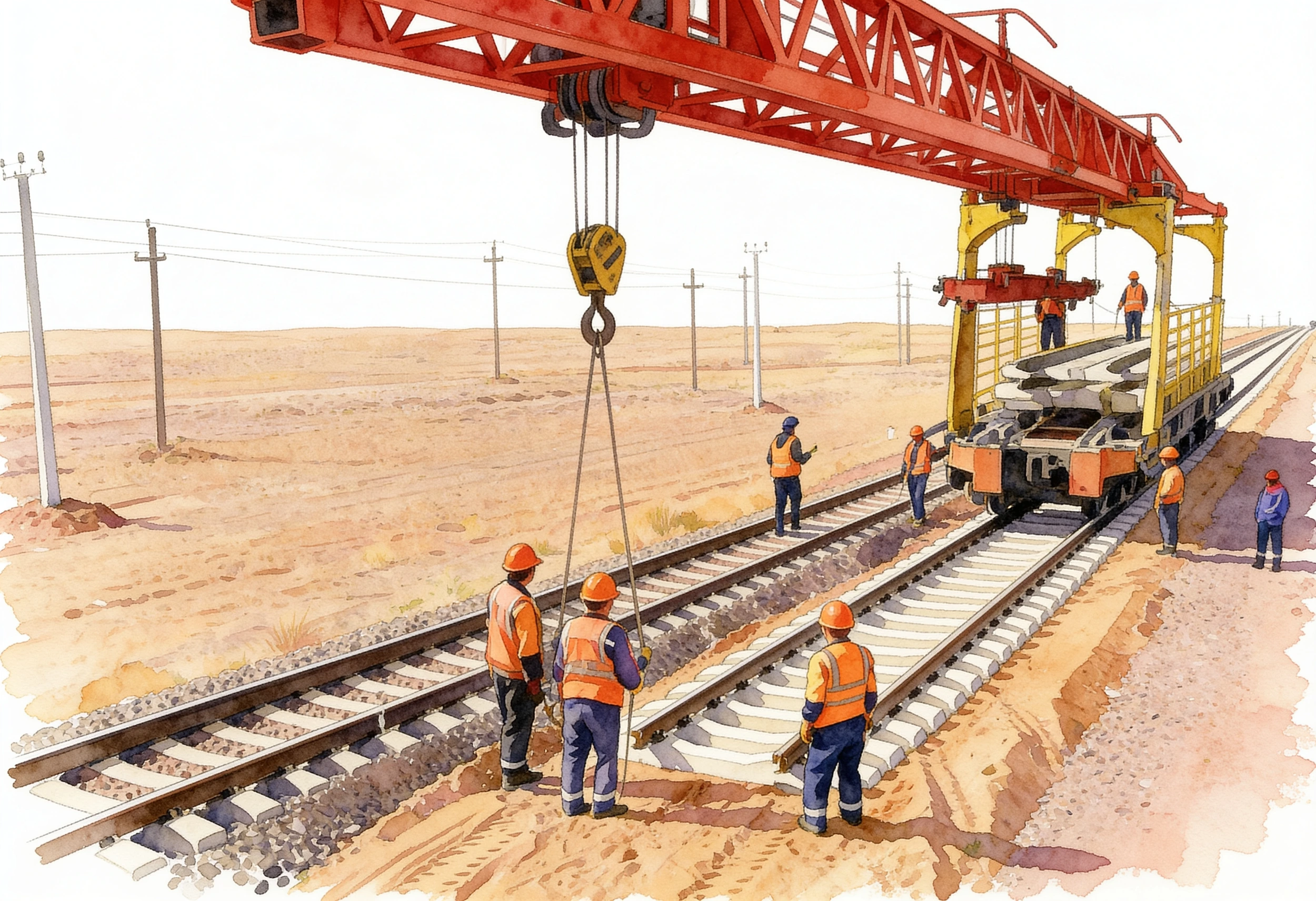
As part of efforts to develop the national transport and logistics system and to strengthen the country’s transit potential, a comprehensive railway infrastructure modernisation programme is being implemented.
To enhance transit capacity and establish a new backbone for the transport system, a number of major railway projects have been launched. These include the construction of the Dostyk-Moiynty and Darbaza-Maktaaral railway lines, the Almaty bypass railway line, as well as the construction of an international container hub at the port of Aktau.
On September 30, 2025, the Head of State of the Republic of Kazakhstan officially launched the second line of the Dostyk-Moiynty railway line, with a total length of 836 km. The commissioning of the second line is expected to increase freight traffic capacity fivefold - from 12 to 60 train pairs per day.
In addition, the first phase of the international container hub at the Port of Aktau was completed in December 2025.
The following infrastructure projects are under construction:
- the construction of the Almaty bypass railway line with completion scheduled in 2026;
- the construction of the Darbaza-Maktaaral railway line scheduled for completion in 2026;
- the construction of the Bakhty third border railway crossing on the Kazakhstan-China border with access to the existing railway section Semey - Aktogay (the "Construction of the railway line Bakhty - Ayagoz" project), scheduled for completion in 2027.
Construction on infrastructure projects initiated in 2025 on behalf of the Head of State is also underway:
- a new railway line Moiynty – Kyzylzhar, scheduled for completion in 2026;
- modernisation of the Altynkol - Zhetygen railway section through its conversion into double-track railway line;
- construction of automatic blocking on the Kyzylzhar – Saksaulskaya, Aksu-1 – Degelen – Zhana-Semey, Kandyagash-Tobol, Nikeltau-Alimbet, Shalkar-Beineu sections.
The implementation of these projects is aimed at increasing capacity of priority sections and further strengthening the transit transport potential of the Republic of Kazakhstan.
Passenger transportation
In 2025, rail passenger turnover decreased by 2.5% compared to 2024 and accounted for 18% of total passenger turnover.
The company’s subsidiary, Passenger Transportation JSC, is actively working to improve travel conditions and improve passenger comfort. Given the extensive length of Kazakhstan’s railway network, service quality remains an important factor in maintaining the competitiveness of KTZ’s passenger operations.
During the reporting year, the renewal of the carriage fleet continued, contributing to improved travel conditions and increased passenger satisfaction.
The Company systematically monitors customer preferences and maintains an effective feedback mechanism. Passenger requests and service-related complaints are carefully reviewed and addressed as part of ongoing efforts to further improve service quality.
Kazakhstan passenger turnover in 2025 by type of transport, million p-km

Share in total passenger turnover, %
Passenger turnover of the Company decreased by 2.7% year-on-year in 2025, amounting to 11,408 million passenger-km (2024: 11,719 million passenger-km). The decline was primarily driven by reduced competitiveness of rail passenger services compared to other modes of transport, as well as ongoing track maintenance works on certain sections, which resulted in timetable adjustments and technical disruptions to train operations.
In 2025, the total number of passengers carried reached 13,269 thousand (in 2024 - 13,796), including:
- 13,026 thousand passengers transported by trains operated by Passenger Transportation JSC;
- 244 thousand passengers transported by trains operated by other railway administrations.
Revenues from passenger transportation totalled KZT 129.2 billion in 2025, representing a 16.9% increase compared to 2024. The growth was primarily driven by tariff adjustments.
New routes
In 2025, the Company continued to expand its passenger route network through the launch of new and the optimisation of existing routes.
During the reporting period:
- the launch of direct carriages on the Almaty-Moscow route via connections with Russian Railways trains;
- a new Almaty-Kostanay train was appointed, and the Astana-Uralsk route was optimized;
- a seasonal Astana-Dostyk train was introduced;
- the Astana-Zhezkazgan train route was extended to Kyzylorda station;
- the frequency of trains was increased on key routes, including Almaty-Petropavlovsk and Almaty-Tashkent (daily);
- the geography of the "Women's Carriage" project was expanded, having served over 790,000 passengers since its launch in 2021;
- further optimisation of the route network was carried out, including the modification and reduction of selected routes.
At the same time, the Company continued to develop its railway tourism offering. In 2025, 10 new tourist trains were launched, and international routes were expanded. Specifically, routes to Uzbekistan were extended to major tourist centres such as Bukhara and Samarkand, creating a comprehensive tourism product and increasing the attractiveness of rail travel for international tourism.
During the reporting period, tourist trains carried approximately 1,500 passengers, confirming sustained demand for this format and its potential for further growth.
As a result of these efforts, the Company's tourism offering received industry recognition. The Company was awarded a diploma of the Magistral Awards in the Best Product of the Year category, underscoring the high quality of its services and the effectiveness of its passenger transportation and railway tourism initiatives.
Comfort for passengers
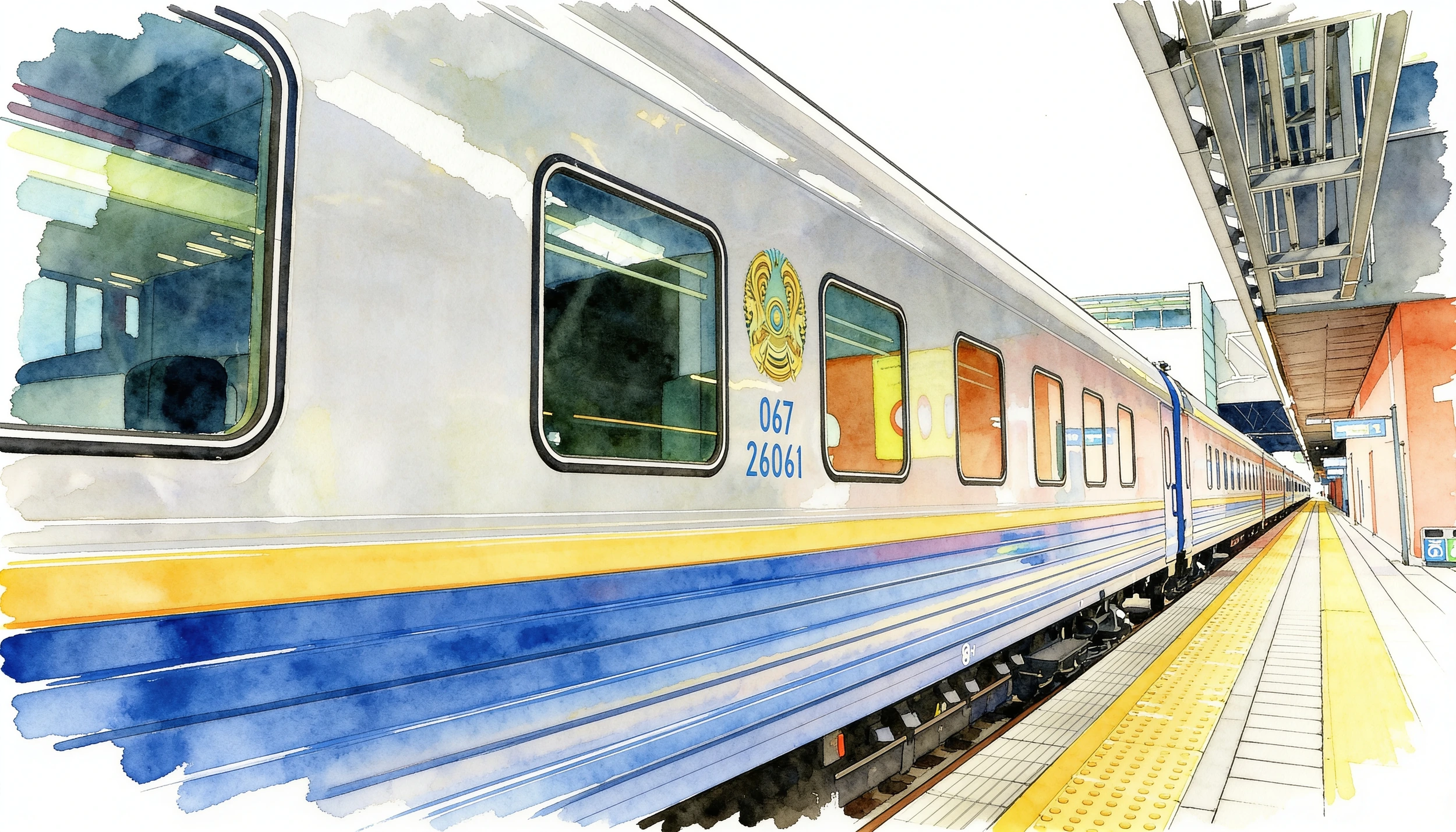
In 2025, Kazakhstan’s passenger rail fleet of was expanded with 161 domestically manufactured railcars, produced at plant in Petropavlovsk.
In 2025, Kazakhstan’s passenger rail fleet of was expanded with 161 domestically manufactured railcars, produced at plant in Petropavlovsk. Among these were 12 modern cars for suburban transportation, which were introduced on the Karaganda-Astana and Astana-Burabay Resort routes, providing passengers with an enhanced level of comfort.
Freight transportation
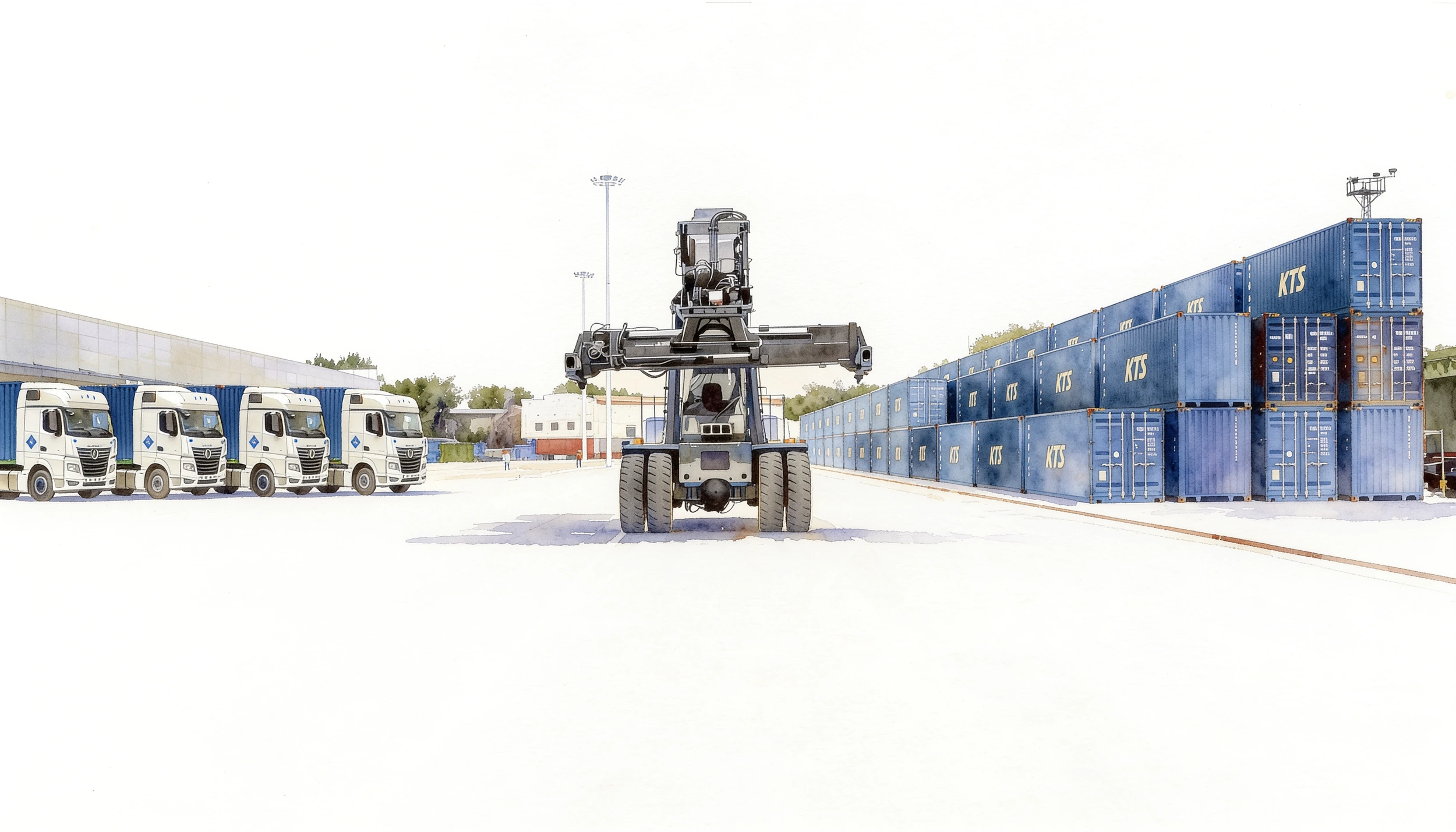
In 2025, total freight turnover across all modes of transport amounted to 584,312 million tonne-km, representing a 13.6% increase compared to 2024.
Rail transport continues to play a pivotal role in freight operations, accounting for 61.8% of the country's total freight turnover. By year-end, railway freight turnover increased by 10.1%, reaching 361,265 million tonne-km.
The Company's tariff-based freight turnover totalled 288.8 billion tonne-km, up 10.4% compared to the previous year. Growth was recorded across all traffic segments.
Freight turnover dynamics by traffic type were as follows:
- Domestic traffic: increased by 3.1% compared to 2024, with growth observed across most cargo categories, except for non-ferrous ores and ferrous metals;
- Exports: freight turnover rose by 13.2% year-on-year, driven by higher volumes of coal, iron ore, grain, construction materials, fertilizers, and other goods (including compound feed, vegetable oil, and feed flour);
- Imports: increased by 5.9% compared to 2024, supported by higher transportation volumes of chemicals, construction materials, iron ore, ferrous scrap, petroleum products, ferrous metals, and other goods (including cement, machinery and equipment, and vehicles and spare parts);
- Transit increased by 19.6%. Growth was observed in the transportation of iron ore from Russia to Uzbekistan, petroleum products from Russia to Central Asian and China, grain from Russia to China. Additional increases were observed in the transportation of chemical cargo from China to Central Asia, Russia and Belarus, as well as from Russia to China and Uzbekistan; non-ferrous ore from Tajikistan, Russia and Uzbekistan to China; ferrous metals from China and Russia to Central Asia; and timber from Russia and Belarus to Central Asia. Growth was also supported by an increase in container transportation along the China–Russia–China, Trans-Caspian International Transport Route (TITR), and China–Central Asia–China corridors.
Alternative transportation routes
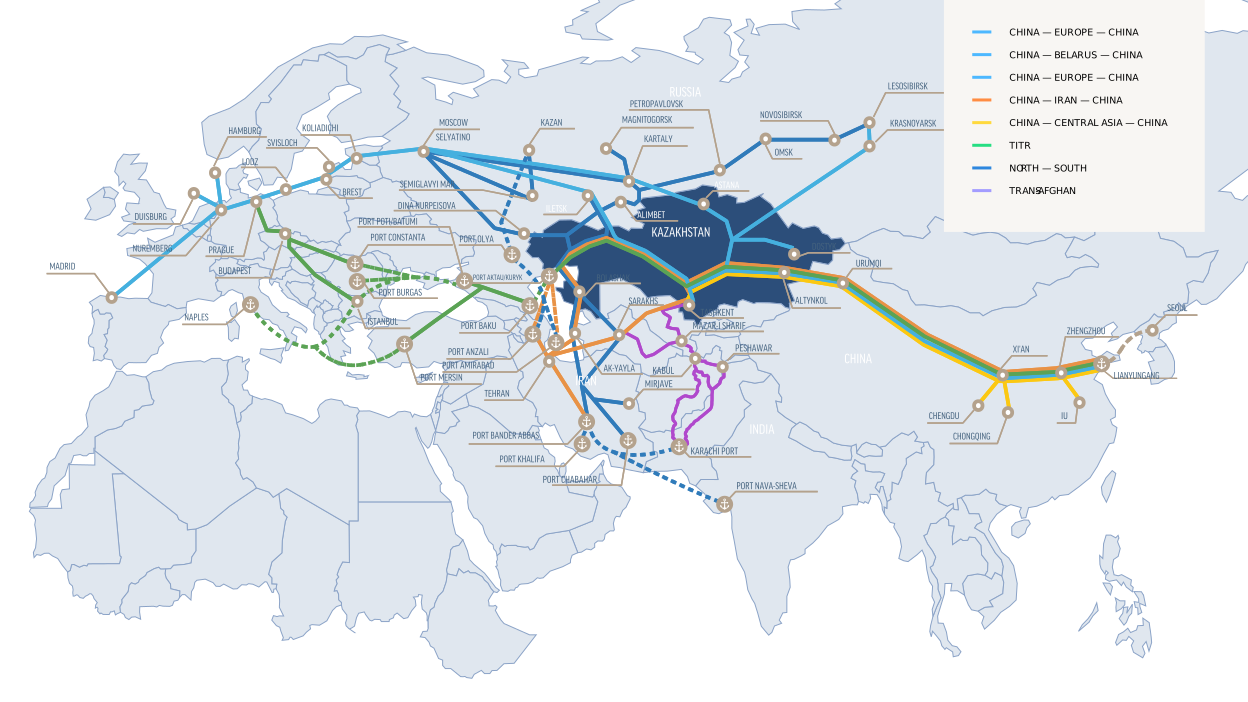
The capacity of the Trans-Caspian International Transport Route is about 6 million tonnes per year, including up to 80 thousand containers.
In 2025, transit volumes along the route reached 0.8 million tonnes, representing a 12% increase compared to the previous year. Container traffic totalled 41.5 thousand TEU, up 14.7% compared to 2024.
In cooperation with route partners, a set of measures was implemented to reduce delivery times. Today TITR offers competitive delivery times averaging 15 to 18 days to the ports of Georgia, which is twice as fast as in 2021-2022. Further efforts are underway to reduce transit times to a stable 10-12 days.
During the reporting period, the geography of shipments from China was expanded with the connection of new cargo flows from the provinces of Wuhan and Shenzhen, supporting increased road utilisation.
In 2025, a comprehensive audit of bottlenecks along the TITR was conducted. As a result, on September 30, 2025, an action plan to address these constraints was signed in Almaty with partners from Azerbaijan and Georgia. The plan envisages measures, including: the establishment of unified long-term tariffs, procurement of vessels, development of railway and port infrastructure, digitalisation of processes, and the elimination of administrative barriers.
To further increase TITR capacity, dredging works are planned at the Port of Aktau in 2026, followed by the reconstruction of berths No. 3 and 12 in 2027, which is expected to increase the port’s throughput by 500 thousand tonnes.
In cooperation with the Ministry of Transport, work continued in 2025 on signing an intergovernmental agreement between the Republic of Kazakhstan and the Republic of Azerbaijan on the development of the TCITR. The agreement is intended to align comprehensive approaches to route development, enhance operational efficiency, and strengthen the role of participating countries as regional transport and logistics hubs.
Establishment of a joint venture within the Trans-Caspian International Transport Route
In 2023, KTZ, Azerbaijan Railways CJSC, and Georgian Railway JSC signed an agreement to establish a joint venture, Middle Corridor Multimodal Ltd., on a parity basis. The Company was registered at the AIFC. The establishment of this joint venture will enable:
- the provision of services under “one-stop-shop” model;
- guaranteed delivery times and costs;
- pursuing a coordinated policy for the development of multimodal services to increase cargo volumes along the China-Europe/Turkey-China route
On November 18, 2025, in Xi'an (PRC) during the Second China–Europe Express Railway Cooperation Forum, a Share Subscription Agreement was signed on the entry of Chinese Railways, represented by the country's largest container operator, CRCT, to join the Middle Corridor Multimodal Ltd. joint venture, which will give new impetus to the development of China-Europe transportation.
The official accession of the Chinese partner is planned for 2026, subject to completion of corporate procedures and replenishing the authorised capital of JV TITR.
The eastern route of the “North-South” international transport corridor continues to attract the growing interest from shippers as a promising alternative for delivering goods to the capacious markets of Iran, India and the Persian Gulf countries.
Sustainable Development
In 2025, National Company Kazakhstan Temir Zholy JSC made significant progress in the field of sustainable development.
On December 23, 2025, the international rating agency S&P Global published the Company’s ESG assessment results as part of the global Corporate Sustainability Assessment (CSA) framework. KTZ received a score of 75 points, representing an increase of 15 points compared to the previous year.
This result placed NC KTZ JSC in the top 3% of leading global transport companies among more than 300 assessed by S&P Global.
The high rating assigned by S&P Global confirms the Company's commitment to sustainable development and its compliance with international environmental, social and corporate governance (ESG) standards. ESG ratings are widely used by investors and financial institutions in decision-making processes.
These achievements reflect the effectiveness of Company’s strategy aimed at sustainable growth, enhanced operational efficiency, and strengthened competitive positioning in international markets.
Plans for 2026
In 2026, the Company plans to:
- increase operational freight turnover to 347.4 billion tonnes-km;
- continue the implementation of large-scale infrastructure projects;
- carry out a comprehensive digitalisation of business processes;
- renew the fleet with modern passenger coaches and freight locomotives.